

Introduction
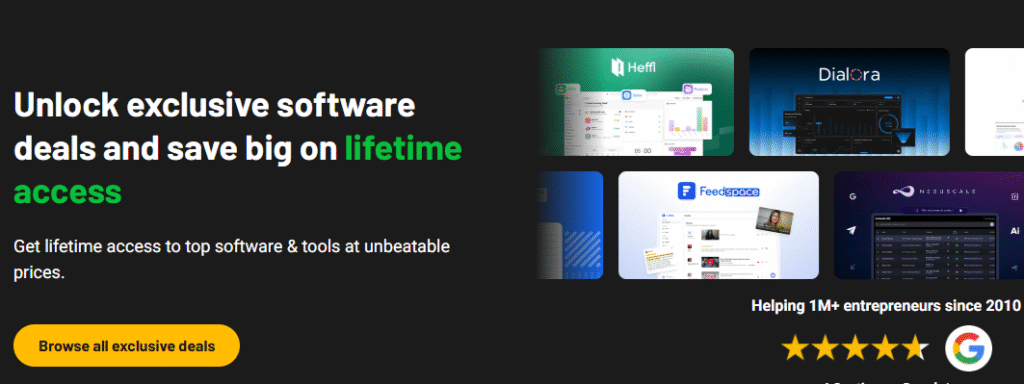
In today’s digital economy, entrepreneurs and freelancers rely on dozens of software tools to manage projects, automate tasks, and grow their businesses. Yet, paying monthly or annual subscription fees for every app can quickly become overwhelming. That’s why “lifetime software deals” — one-time payments for permanent access — have exploded in popularity. Platforms like AppSumo have become well-known for offering these exclusive deals at huge discounts, promising professional-grade tools for a fraction of their usual cost.
But behind the excitement and flashy savings, many buyers are starting to ask tough questions: Are lifetime deals really worth it? What happens when a company offering a deal shuts down, stops updating, or limits features? Can a “one-time payment” truly guarantee long-term reliability?
This article explores how lifetime software deals work, why they’ve become so attractive to entrepreneurs, and the major concerns you should consider before investing your money. Whether you’re a startup founder, freelancer, or small business owner, understanding the pros and pitfalls of platforms like AppSumo can help you make smarter, safer purchasing decisions in an increasingly subscription-driven world.
AppSumo and the Lifetime Deal Model: Promise and Pitfalls
In the fast-moving world of digital entrepreneurship, software costs can quickly accumulate. Every small business, freelancer, or marketing team relies on a mix of tools — for project management, automation, analytics, design, and customer relations. Paying monthly subscriptions for each platform can become unsustainable, especially for startups with tight budgets. This reality gave rise to the popularity of platforms like AppSumo, a marketplace designed to provide entrepreneurs with heavily discounted or “lifetime” access to software. The promise sounds almost magical: pay once, own the tool forever. But as with many things that sound too good to be true, there are important questions and concerns behind the hype.
At its core, AppSumo’s business model is simple. The platform partners with software creators to offer limited-time deals at steep discounts — often 80% or 90% off normal subscription pricing. Instead of paying $30 or $50 per month indefinitely, a customer might pay a one-time fee of $49 or $99 for “lifetime access.” This arrangement appeals to budget-conscious business owners who want to reduce recurring expenses. It also gives early-stage software companies a surge of users, exposure, and quick capital that can fund growth. In theory, both sides win: buyers get long-term value, while vendors receive marketing reach and upfront revenue.
The advantages for buyers are clear. First, the savings are often significant. Entrepreneurs can acquire professional-grade tools that would otherwise be out of reach. Second, these deals encourage experimentation. Because the financial barrier is lower, users can test new software solutions without fear of long-term subscription commitments. Third, many of these products genuinely deliver useful functionality — from social-media schedulers and AI writing assistants to CRM systems and email-marketing platforms. Some tools bought on AppSumo have gone on to become popular mainstream products, meaning that early adopters got extraordinary value for their initial purchase.
However, the simplicity of the model hides a complex web of risks and uncertainties. The most frequent concern relates to the meaning of the word “lifetime.” In marketing, “lifetime” usually refers to the lifetime of the product or the duration of the company that offers it — not the customer’s lifetime. If the vendor discontinues the product, rebrands it, or introduces a new version, the original “lifetime” deal may become worthless. Many users have discovered that their lifetime access did not include new updates or that major new features were moved into higher paid tiers. In other words, the deal might technically remain valid but lose practical value over time.
Another issue is the sustainability of the vendor’s business. When a company sells hundreds or thousands of lifetime licenses for a small one-time fee, it gains quick cash but sacrifices recurring revenue. Once the initial funds are spent, the company still has to maintain servers, support users, fix bugs, and release updates — all without continuous income from those lifetime customers. This imbalance often leads to stagnation or shutdown. A significant number of software tools that launched through lifetime deal platforms have later been abandoned, leaving users stranded with outdated or nonfunctional products.
Quality and reliability also vary widely. Some of the deals offered through such marketplaces are for early-stage or experimental products. They may look impressive in demos but lack polish, integrations, or scalability. Many users report discovering bugs, missing features, or slow performance shortly after purchase. While AppSumo typically offers a refund period (often around sixty days), this window may not be long enough to detect deeper problems or long-term weaknesses in the product. Once the refund period closes, users are left with whatever state the product is in — for better or worse.
Customer support can be another challenge. Because the vendors are often small startups with limited teams, post-purchase assistance may be minimal. Questions go unanswered, and feature requests pile up. Over time, updates become rare, and the product community loses momentum. Buyers expecting the same level of professionalism as with major SaaS providers can be disappointed.
There is also a psychological element to consider. Lifetime deal platforms thrive on urgency and the fear of missing out. Deals are usually advertised as limited-time offers, creating pressure to buy quickly before the offer expires. The result is that many users purchase software impulsively, without a clear strategy for how they will use it. The sense of getting a bargain overshadows practical evaluation. As a consequence, people accumulate dozens of lifetime deals that they never install or use meaningfully. The actual savings, in the long run, may be negligible if the tools sit unused in digital storage.
Even when the tools are functional, buyers should consider the risk of dependency. Integrating a new platform deeply into your business workflow means investing time, data, and training. If that platform later disappears or stops updating, migration costs can be high. Data loss, broken integrations, and retraining can consume far more resources than the original savings. Therefore, using a lifetime-deal product for experimental or secondary tasks is safer than relying on it for mission-critical operations.
Another subtle concern involves ethics and sustainability within the broader software ecosystem. When users expect powerful tools for one-time payments of under $100, it can create pressure on developers and devalue ongoing support work. Sustainable software development requires continuous investment in security updates, compatibility adjustments, and user support. A purely lifetime-deal model does not naturally incentivize this. Some experts argue that while such deals benefit early users, they can undermine long-term innovation by forcing developers into short-term financial thinking.
To navigate these challenges, buyers should approach lifetime deals strategically. Before purchasing, evaluate whether the software solves a current, concrete problem for you. Research the vendor’s history, development activity, and customer feedback. Check how long the company has existed, how frequently it updates the product, and whether its roadmap seems realistic. Carefully read the terms of the deal: does “lifetime” include updates, support, and future features? Understand the refund policy and any limitations.
It’s also wise to limit how many lifetime deals you purchase at once. Buy one, test it thoroughly during the refund window, and ensure it fits your workflow. If it proves valuable and reliable, keep it. If not, request a refund promptly. Treat these deals as experiments rather than permanent foundations of your business infrastructure.
In conclusion, platforms like AppSumo represent an appealing but double-edged opportunity. They democratize access to digital tools, allowing small businesses and freelancers to experiment and grow at a fraction of normal cost. Yet, the model is inherently risky: the meaning of “lifetime” is uncertain, vendor sustainability is fragile, product quality varies, and the psychological temptation to overspend is real. A savvy buyer can gain immense value by being selective, cautious, and informed — but anyone expecting guaranteed, long-term reliability from every deal will likely face disappointment. The key is balance: embrace the opportunity for innovation and savings, but never forget the fundamental truth that in business, as in life, there is no such thing as a free lunch.